
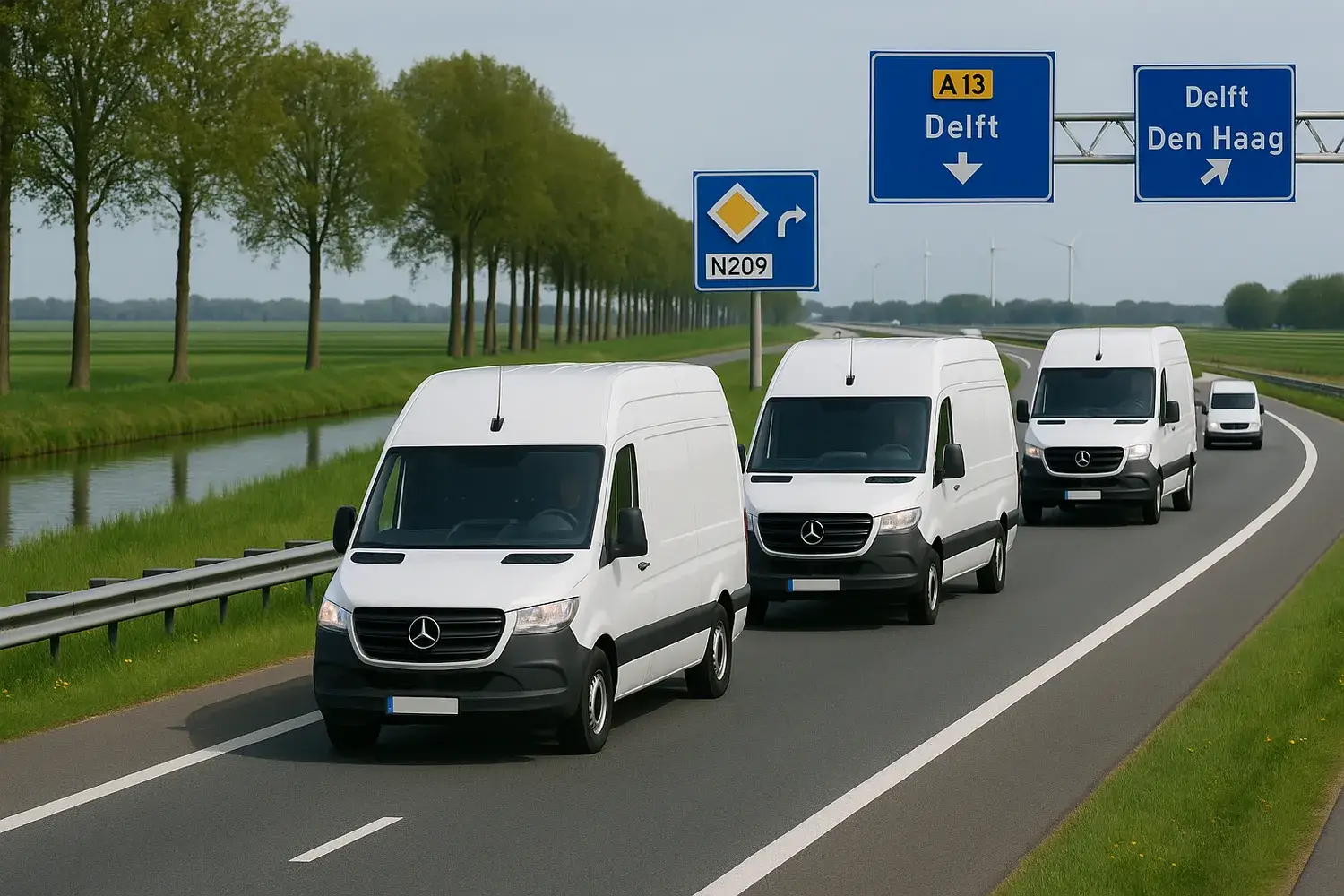
The modern driver in European logistics
A bus driver carrying out international transport today has a much broader range of responsibilities than just driving.
This is the company representative, the person responsible for cargo security, customer communication and company image.
In modern logistics, the driver is a professional showcase for your transport company.
1. Cargo liability
The driver is responsible for the goods from the moment of loading until delivery to the consignee.
His responsibilities include:
- checking that the load has been properly secured,
- control of the number of pallets or parcels,
- delivery of goods without damage,
- signature and return the CMR consignment note after completion of transport.
An incorrectly completed CMR may cause problems with insurance or settlement, so accuracy and reliability are key.
2. documents and administration
During international transport, the driver must carry a set of documents:
- waybill CMR,
- transport order or loading note,
- vehicle documents (registration, insurance),
- special certificates, e.g. ATP for refrigerated transport.
In the event of an inspection (ILT, ITD, police, customs), the documents must be available immediately - failure to do so may result in a fine or seizure of the vehicle.
3. knowledge of regulations in EU countries
Each country in Europe has its own regulations for vehicles up to 3.5 tonnes.
The driver should know or check:
- permissible speeds,
- toll and vignette rules,
- restrictions on entry into low-emission zones (LEZs),
- traffic bans on weekends and public holidays.
Examples: - In Germany, there is a ban on commercial transport on Sundays,
- In Belgium and the Netherlands, LEZs are active - older diesels are not allowed to enter cities.
4 Work and rest times
Although drivers of vehicles up to 3.5 tonnes do not normally have to use a tachograph, they must be able to demonstrate their working and rest times.
Companies are increasingly using GPS or electronic driver registration systems.
Recommended standards:
- max 9 hours of driving per day,
- after each 4.5 hours minimum 45 minutes break.
Taking care of the rhythm of work and rest is not only a duty, but also a safety issue.
5. professional attitude and communication
The driver is often the customer's only direct contact with the transport company.
Therefore, the key is:
- courtesy and punctuality,
- neat appearance,
- ability to react quickly and inform the planner of delays.
A positive customer experience often translates into new orders and long-term cooperation.
6 Safety on the route
Safety is at the heart of professionalism.
The driver should regularly check the technical condition of the vehicle:
- tyres, lighting, brakes, operating fluids,
- proper load securing,
- choose guarded car parks during stops.
Preventing breakdowns and theft is part of professional responsibility.
Summary: The driver as a key element in the logistics chain
A bus driver in international transport today is a specialist who combines logistical, technical and communication skills.
He is responsible for merchandise, security, documentation and customer relations.
In 2026, its role will become even more important - with the introduction of new digital tools and higher security standards across Europe.


0 Comments